
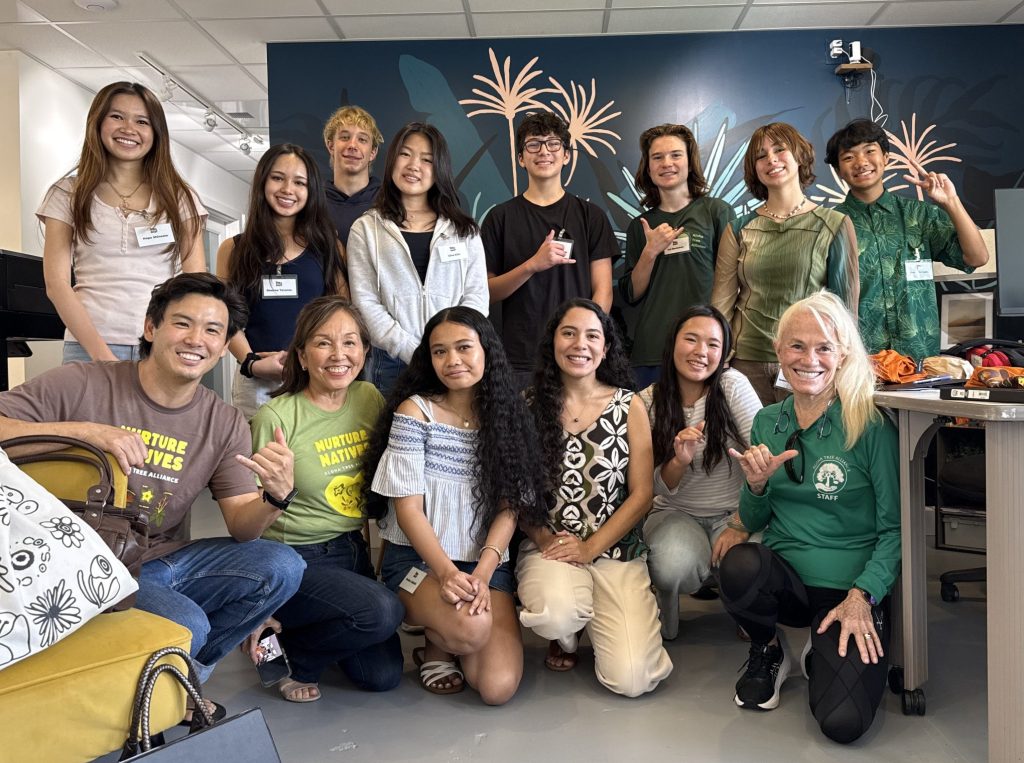
This year, Aloha Tree Alliance welcomed its second ʻĀina Allies cohort—12 students representing six schools across Oʻahu. In addition to the program's deep dive into field-based conservation work, the 2026 cohort took on an intern-led research and design project, with each team developing an actionable deliverable for ATA.
Beginning at the program's kickoff orientation, interns self-sorted into three groups based on the aspects of conservation they were most passionate about exploring: Soil and Water Management, Native Plant Restoration, and Conservation Education and Outreach. They immediately began asking questions about ATA's programs, challenges, and community partners, building a deeper understanding of the forested area along Kuliʻouʻou Ridge Trail, our mission, and the communities we serve. After a period of brainstorming and ideation, the ʻĀina Allies shaped the scope of their projects alongside Samantha Alvarado, our Education and Communications Manager and Internship Program Coordinator.
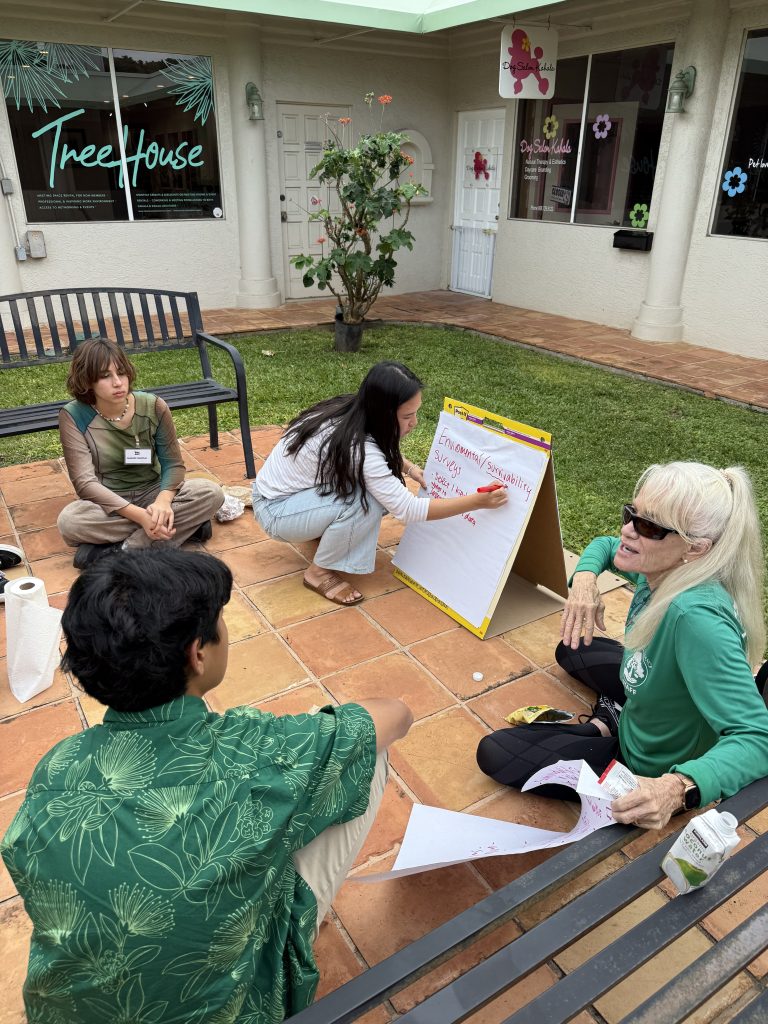
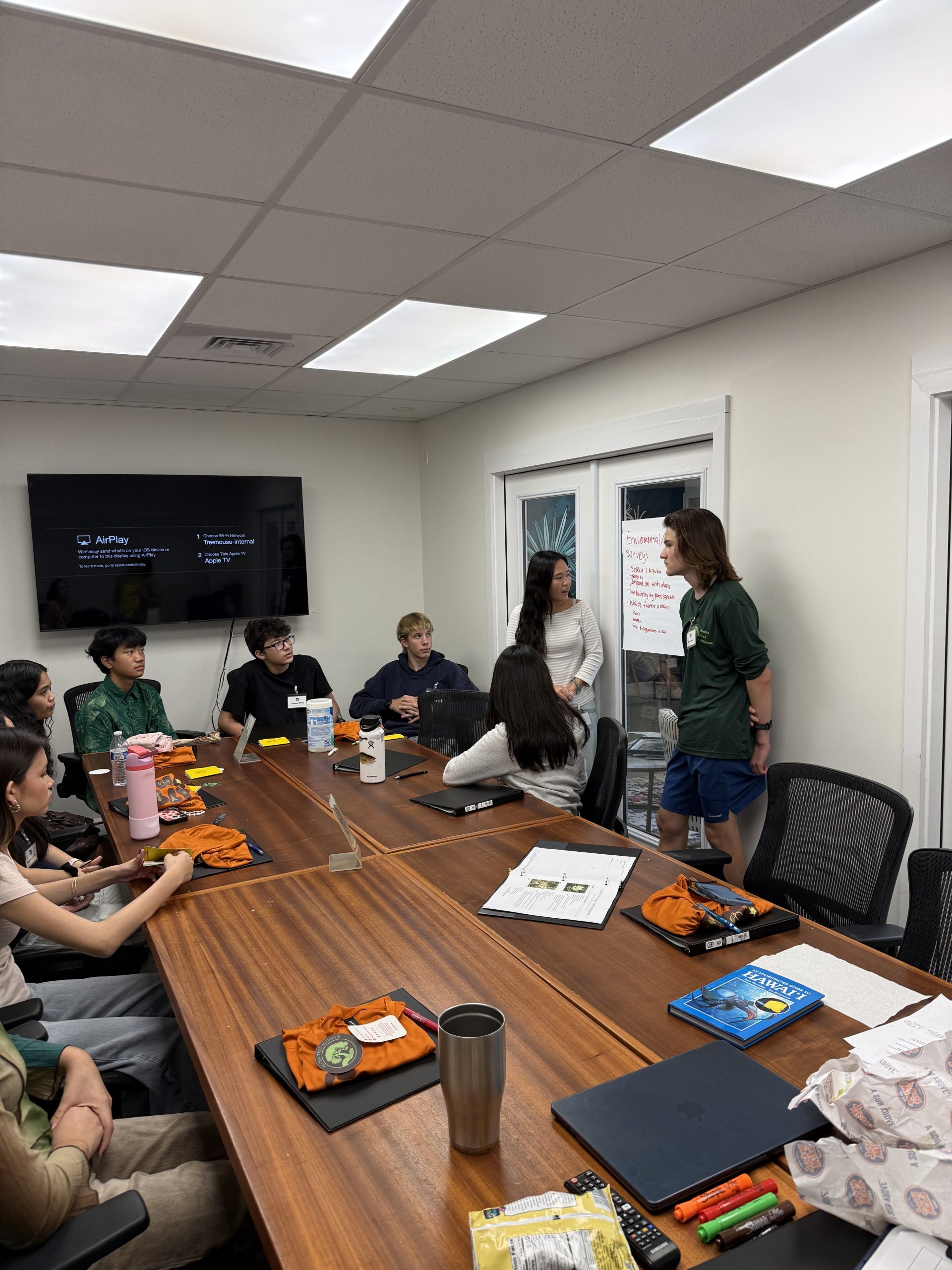
Throughout the internship, the ʻĀina Allies outlined key project tasks, checked in regularly with ATA staff to strengthen the relevance of their work, and participated in collaborative working sessions. All interns had the opportunity to learn three different types of data collection to develop their conservation skills. To support the Soil and Water Management team, interns participated in soil sampling with Makaliʻi Metrics, a rising local soil science company, collecting composite soil samples and core bulk density samples across five of ATA's kīpuka (restoration sites). For the Native Plant Restoration team, interns received training from our Field Manager, Eli Livezey, in plant survivorship surveying, using 10-foot transects to tally all plants across Kīpuka Silky Oak. Finally, the ʻĀina Allies developed a social science survey to gauge volunteer knowledge across conservation topics and ATA's programming, surveying over 60 participants at April's Earth Day Community Workday. These three datasets provided interns with meaningful insight into their project focus areas and will continue to inform ATA's conservation decision-making.
Native Plant Restoration ʻĀina Allies: Gina Kim, Benjamin Fujita, Lennon White
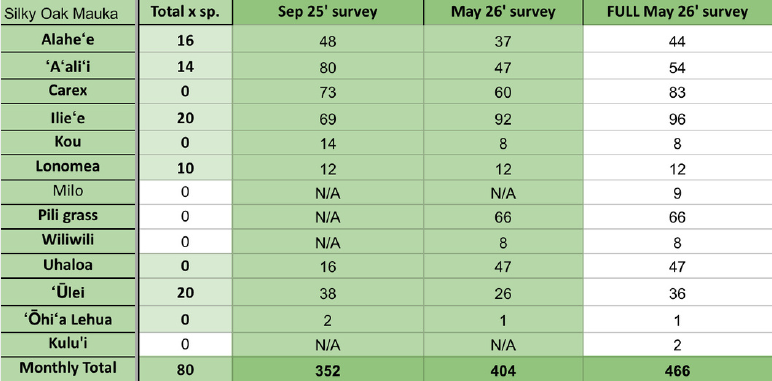
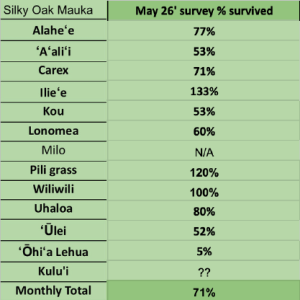
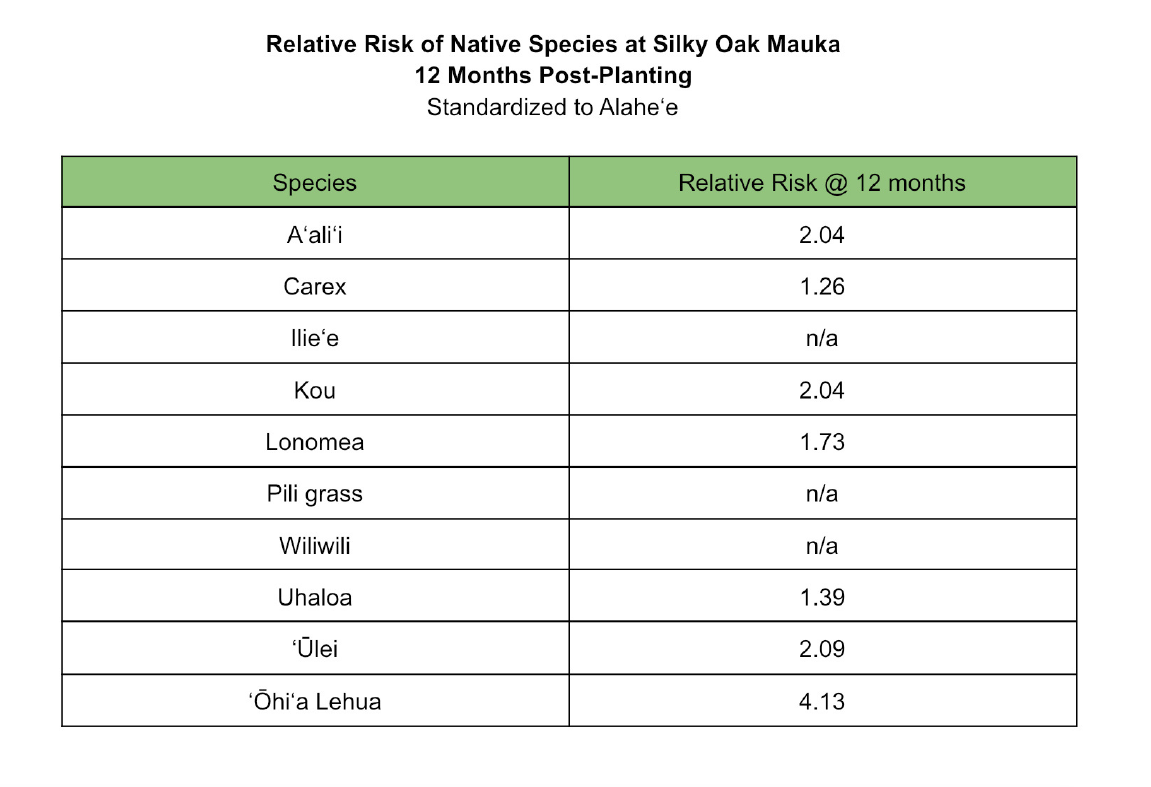
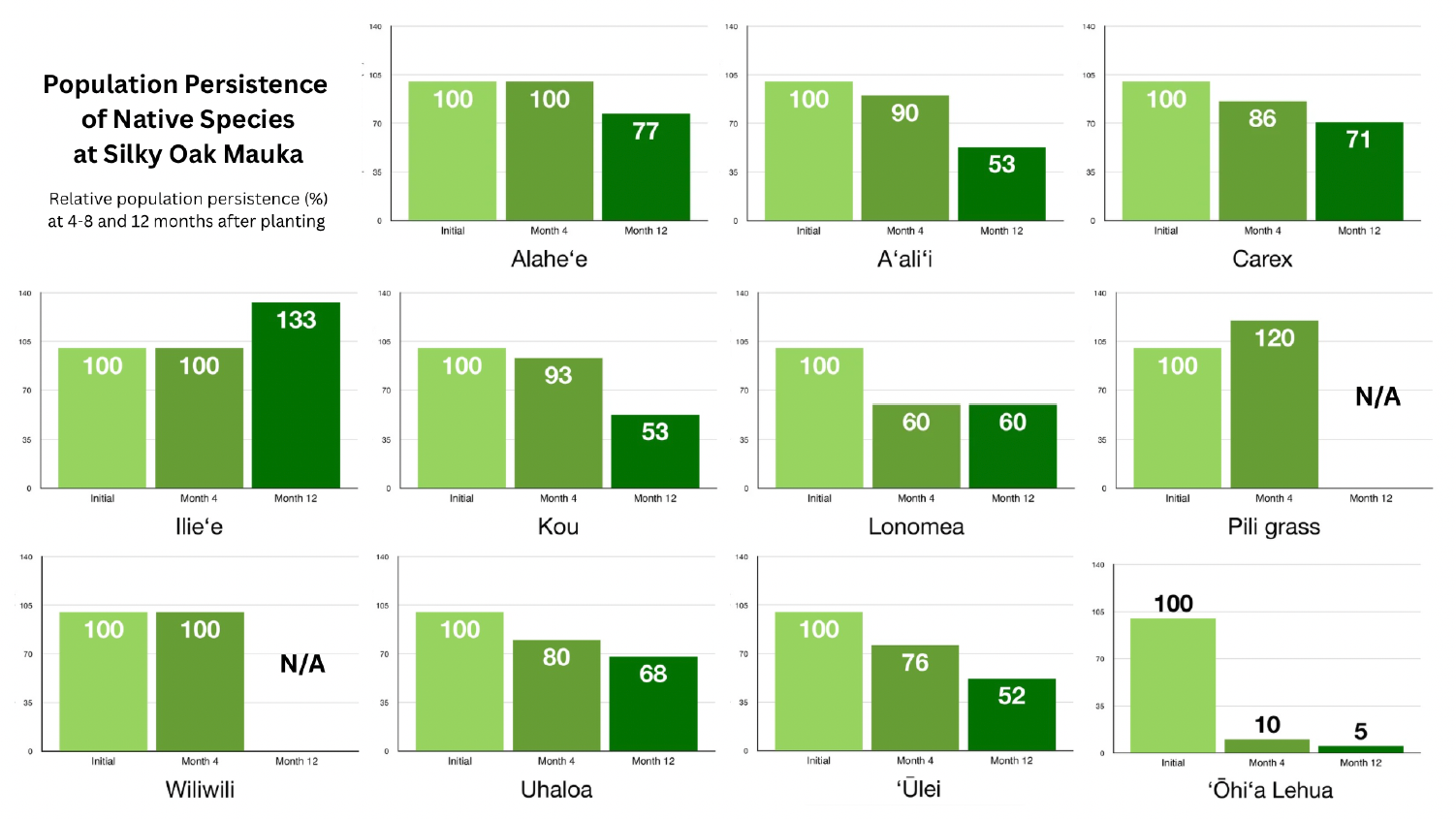
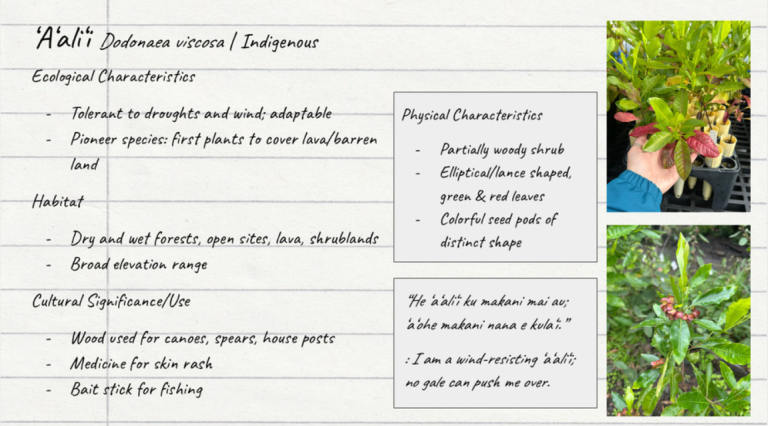
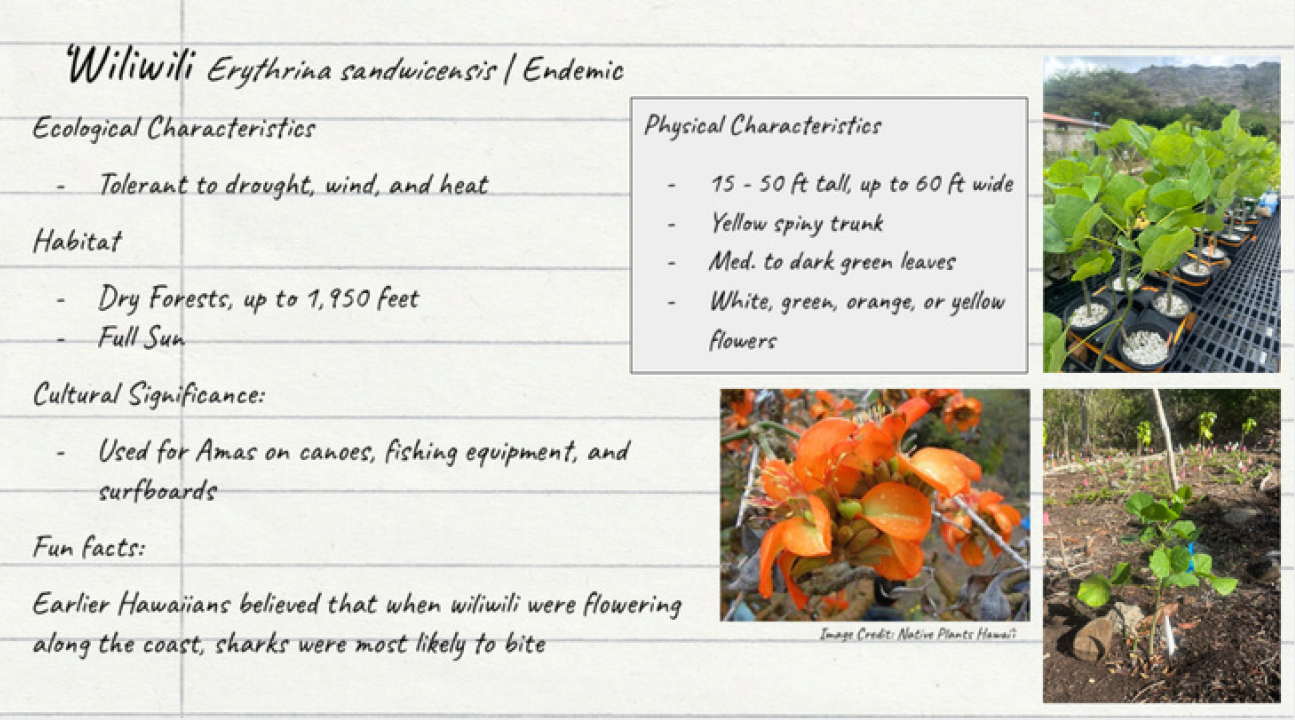
The plant restoration team focused on a pressing gap in ATA's data: a lack of longitudinal records on how successfully different species maintain their populations over time. Using 10-foot transects, they conducted plant counts at Kīpuka Silky Oak Mauka and combined their field data with results from previous surveys to calculate population persistence—a metric that captures how well a species holds its numbers at different points since planting. Their results revealed meaningful variation: ʻAlaheʻe showed relatively strong ongoing survival, while ʻAʻaliʻi had a high initial rate but experienced a notable decline around the one-year mark, making it roughly twice as likely to die at that stage compared to other species. Kou survived well early on but struggled later, while Lonomea showed a sharp initial drop followed by stabilization. These patterns give ATA a valuable framework for anticipating when species are most vulnerable and where to focus care and monitoring efforts.
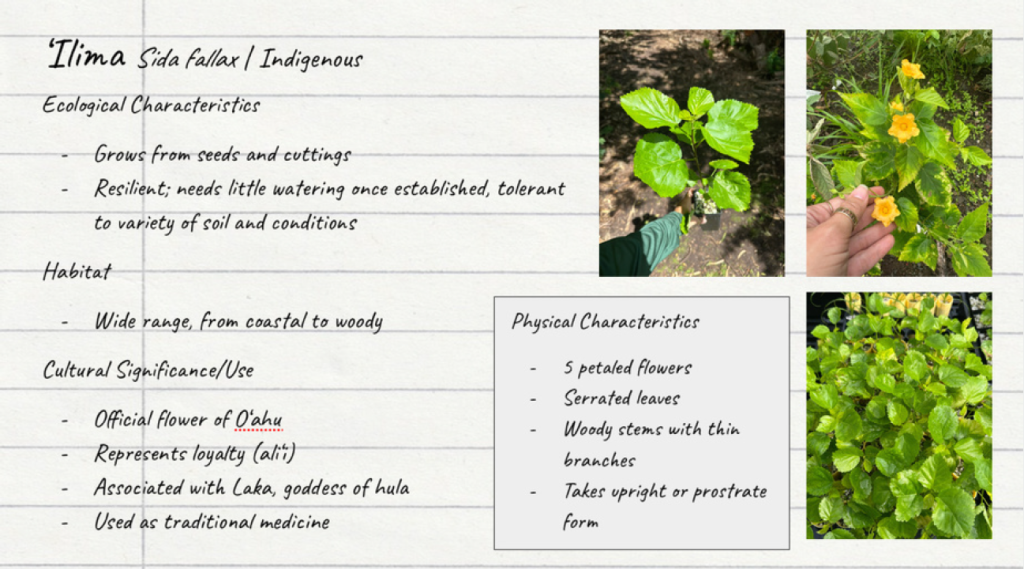
Project Output: The Plant team developed Plant Identification Cards featuring Hawaiian and scientific names, notable characteristics, cultural and historical significance, and fun facts. As ATA works to empower volunteers to collect reliable field data, accuracy in plant identification remains one of our greatest challenges. These cards will serve as an essential trailside tool to help volunteers correctly identify native species and reduce misidentification during community workdays.
Soil and Water Management ʻĀina Allies: Irene Chen, Peter Yu, Daniel Ward, Kai Backman
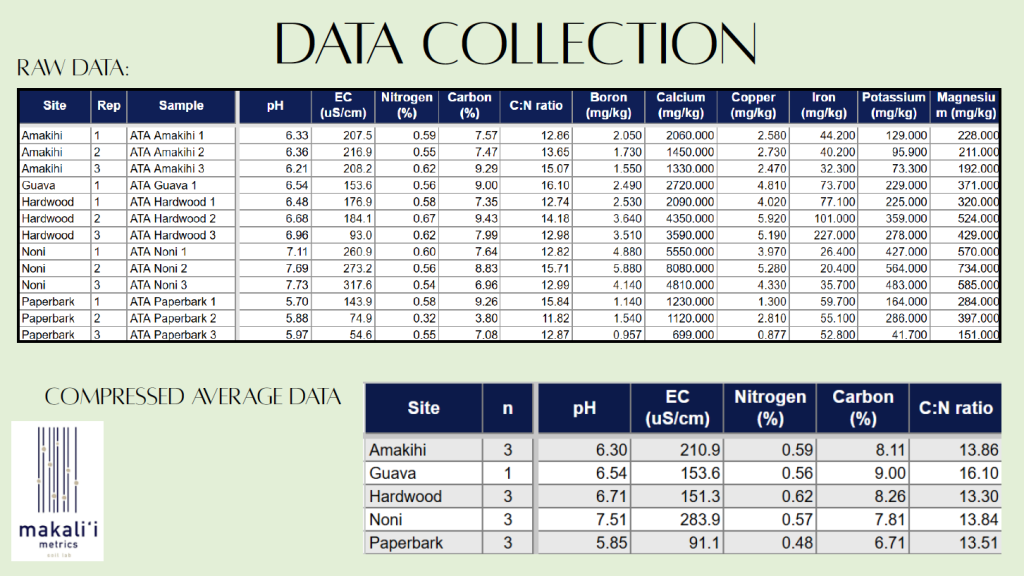
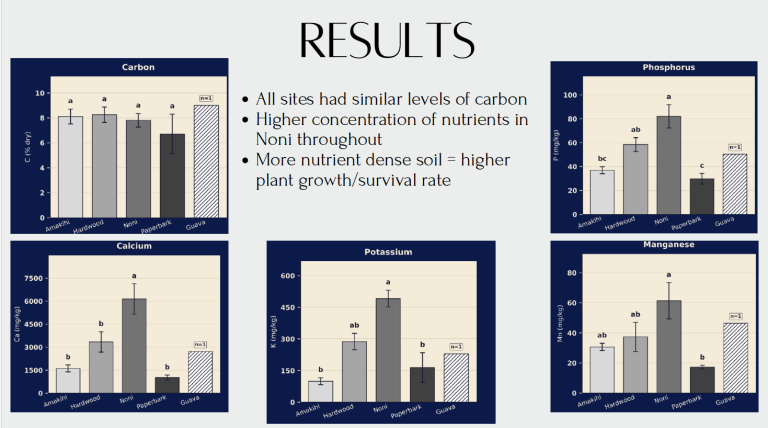
The soil team set out to understand how nutrient levels and water retention vary across ATA's kīpuka, with the goal of informing more strategic planting decisions. They collected two types of samples (composite and bulk density cores) and tested for key elements including carbon, phosphorus, calcium, and manganese. One of their most striking discoveries was that soil composition can vary dramatically between spots just 20 feet apart. Across all sites, Noni kīpuka stood out as the most nutrient-dense, a finding with direct implications for plant survival rates and site management. The team also explored the relationship between soil composition and water retention, recommending longer-term monitoring and expanded sampling across additional sites to track changes before and after rainfall events.
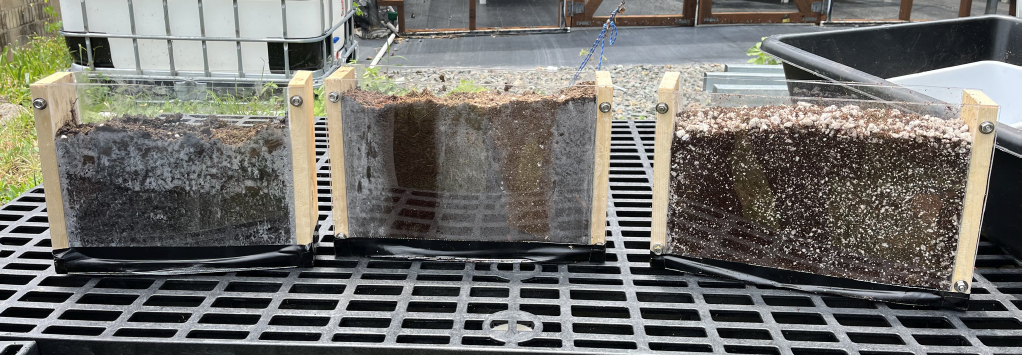
Project Output: The Soil team assembled a soil viewing station: a transparent display comparing Kuliʻouʻou ridge soil, nursery planting media, and rooted plant soil, complete with a catchment system to demonstrate how different soil compositions affect water filtration. This hands-on display will help volunteers understand the role of soil health and growing media in supporting plant survival and water conservation across our kīpuka.
Conservation Education and Outreach ʻĀina Allies: Desiree Tavares, Venice Cabatic
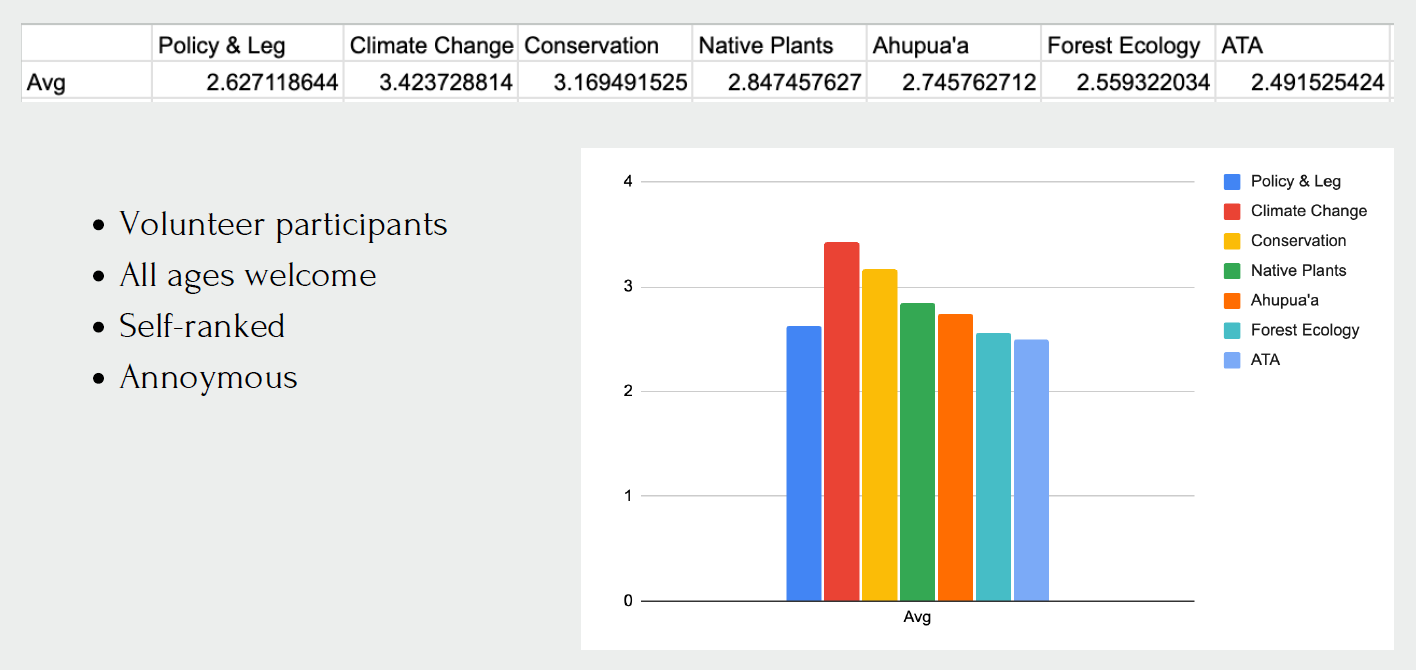
The education team identified a meaningful disconnect between ATA's programming and volunteer awareness: while community members are eager to engage with nature, many have limited opportunities to learn about native plants or ATA's specific mission and work. To better understand this gap, the team developed and administered a self-ranked knowledge survey at the April Earth Day Community Workday, gathering responses from 59 participants across age groups. While volunteers felt reasonably confident about broad topics like climate change and conservation, scores were modest overall, most falling around 2 out of 5. Notably, familiarity with ATA specifically scored lowest, averaging just 2.49 out of 5. Based on their findings, the team recommended carving out more time during community workdays for educational programming, increasing mission-focused content on social media, and developing hands-on activities to improve knowledge retention at outreach events.
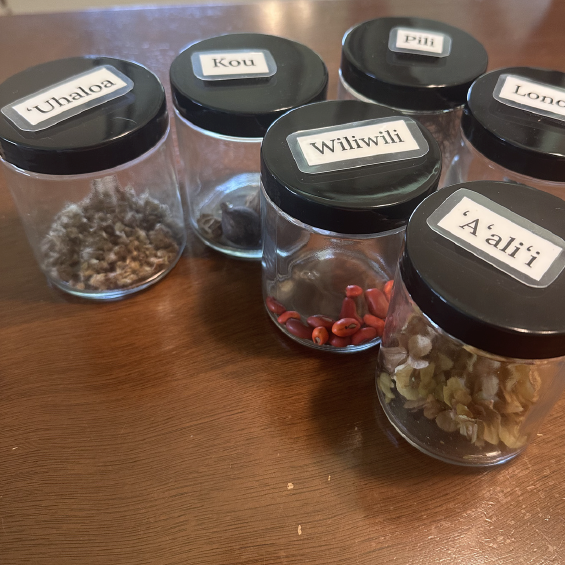
Project Output: The Education team designed a seed station guessing game using seeds collected by our Nursery Manager, Olivia Taub, and community partners, built to spark curiosity and conversation at tabling and outreach events. Engaging, accessible activities that work across a range of ages are essential for drawing people to our table and deepening their connection to our work. This station will go directly into use at upcoming ATA events.
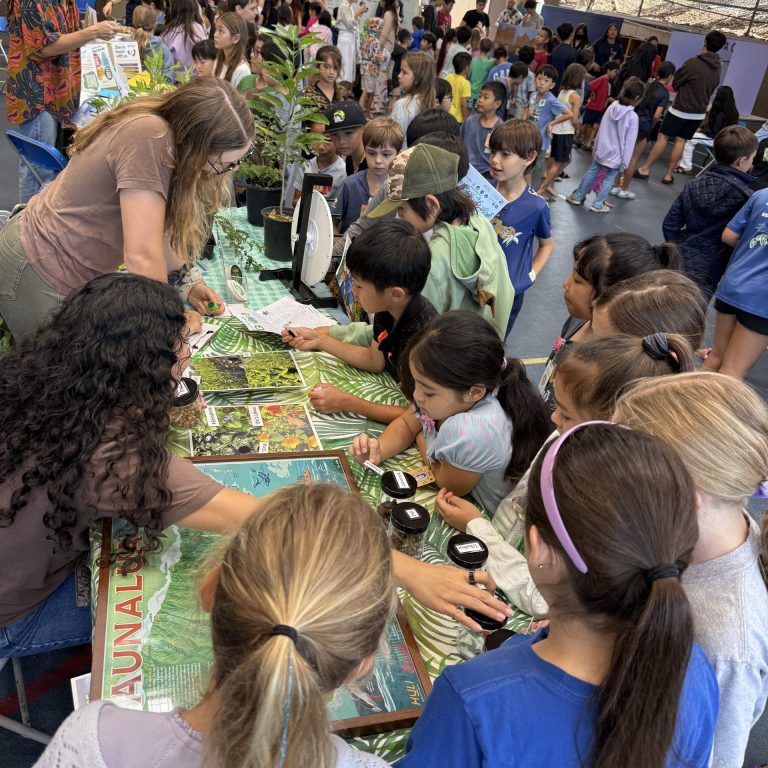
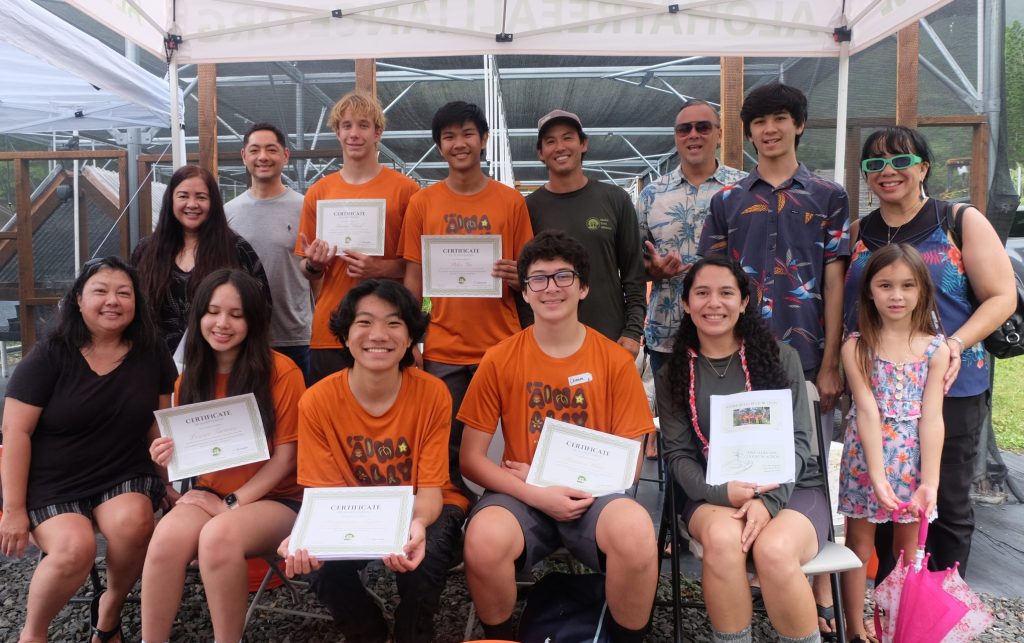
The ʻĀina Allies wrapped up their program with a celebration lunch and final project presentations for their families and ATA staff at our Native Plant Nursery. Each team shared the conservation challenges they identified, their data collection methods, research findings, and the design outputs they created.
This year's interns also participated in four additional conservation activities: planting native plants along Kuliʻouʻou Ridge Trail with Aloha Tree Alliance; a propagation workshop led by Nursery Manager Olivia Taub; a Huakaʻi (journey) to visit our partner Mānoa Heritage Center; and a tour of ATA's Native Plant Nursery in Kamilo Nui. Cohort 2's programming was intentionally expanded beyond trail and field work to expose interns to the broader conservation landscape — including the role of nonprofit partnerships, the diversity of careers in the field, and a deeper appreciation for our native plants and their ecological significance within our modern Ahupuaʻa.
Applications for Cohort 3 will open in December of 2026. If you, or someone you know may be interested, please reach out to info@alohatreealliance.org.